
Scotland’s Best: Travel Guide
TouchScreenTravelsTravel & Local
5.03.00 Reviews
- Version
- 2.1
- Installs
- 10.00K
- Age Rating
- Everyone
Screenshots
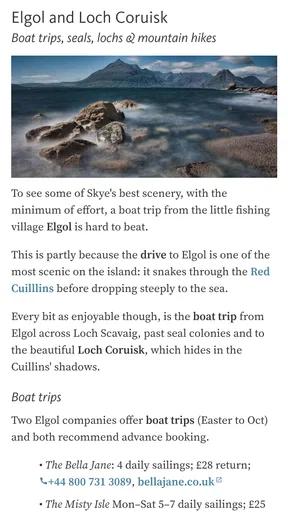
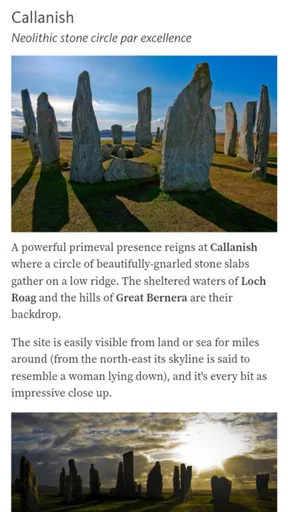
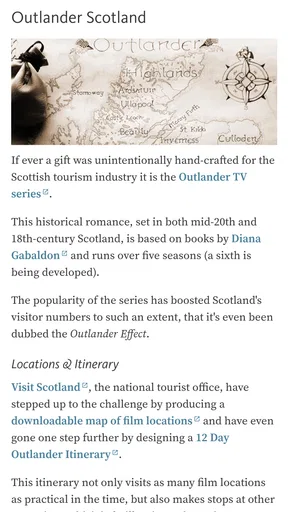
Our Review of Scotland’s Best: Travel Guide
 Analysis by Appyee
Planning a first trip around Scotland can become complicated surprisingly quickly. There are famous cities, dramatic coastlines, historic sites, islands, castles, walking areas and small places that are easy to miss when you rely only on a general map. Scotland’s Best: Travel Guide takes a more focused approach: it is a travel and local app from TouchScreenTravels that concentrates on helping visitors think about Scotland as a destination rather than as a collection of disconnected search results.
I found its biggest appeal in the way it encourages deliberate planning. Instead of opening a broad mapping service and immediately facing restaurants, shops, traffic layers and countless unrelated listings, I could approach the country through a travel-guide perspective. That makes it especially useful for a first visit, when the hardest part is often deciding what deserves time in the first place.
The app is free to download, suitable for Everyone, and currently sits at version 2.1. Its average score is a perfect 5.0 from around a hundred ratings, while its install count has passed ten thousand. Those figures suggest a small but very positive audience rather than a mass-market navigation tool. I would treat it as a curated companion for choosing places and shaping an itinerary, not as a complete replacement for maps, transport information or live booking services.
What the guide feels like on a first trip
My first impression was that this is best understood as a starting point for exploration. The store summary presents it as an independent guide to Scotland’s highlights, and that independent angle matters. The experience is more about forming a sense of place and selecting worthwhile stops than about managing every practical detail of a journey.
That distinction is important before installation. Someone looking for turn-by-turn directions, live road conditions, train departures, accommodation availability or a constantly updated list of businesses will probably be happier with a map or transport app. Someone who wants help answering “What should I see?” and “How can I make this trip feel coherent?” is much closer to the intended audience.
I also like the fact that the guide can be useful before the trip, not only while standing outside a landmark. I can imagine using it during the early daydreaming stage, when I know Scotland is the destination but have not yet decided whether the journey should focus on urban culture, scenery, history or a mixture of all three. A focused guide gives those decisions a clearer shape than a blank map does.
For a first-time visitor, the most helpful habit is to treat every suggested highlight as a candidate rather than an obligation. Scotland rewards slower travel, and trying to collect every famous location can turn a scenic holiday into a sequence of long drives. I would use the app to build a shortlist, then check distances, opening arrangements and transport separately before committing to a route.
Who will get the most from it
This app suits independent travelers who prefer to choose their own pace. It can also help couples or families who are still negotiating what kind of holiday they want. One person may be interested in history, another in landscapes, and another in easy stops that fit between longer journeys. A guide centered on highlights gives everyone something concrete to discuss.
It is also a sensible companion for a traveler who does not want to plan every hour. I would use it to identify a few anchors for each part of a trip, leaving room for weather, local discoveries and unplanned detours. That approach is more realistic in Scotland than an itinerary that assumes every road journey will take exactly as long as expected.
I would be less enthusiastic about recommending it as the only travel tool for a visitor with tight accessibility requirements, a complicated public-transport itinerary or a need for current operational details. In those cases, the guide may still help with inspiration, but specialist sources should handle the practical verification.
What to do immediately after installing
The first setup is refreshingly straightforward in concept: open the guide with a clear question in mind. Do not begin by trying to plan the whole country. Decide whether you are looking for a city break, a scenic route, historic places, outdoor stops or a broad overview. That small decision makes the content easier to use because you are evaluating suggestions against a real trip rather than browsing without a purpose.
I recommend keeping a note beside the app while exploring it. Write down each place that genuinely interests you, then add a short reason such as “good rainy-day option,” “near the planned route,” or “worth a full morning.” This prevents a common travel-planning mistake: collecting names without understanding how they fit together.
The app is free, which makes this initial exploration low-risk. It also includes in-app purchases priced at $5.49 per item, so I would pay attention to what is available in the free experience and what, if anything, requires an extra purchase before building your entire plan around a particular part of the guide. That is not a criticism by itself, but it is a practical step for anyone trying to control a travel budget.
Because the minimum operating-system requirement is 10, most users with a reasonably current device should be able to approach installation without treating the app as a technical project. I would still install it before departure rather than at the airport or beside a remote attraction. That gives you time to become familiar with its organization and decide whether it covers the kind of trip you are planning.
The first meaningful success
The first successful action is not simply opening a destination entry. It is turning one interesting suggestion into a realistic half-day or day plan. For example, I would choose one highlight, identify the surrounding area, and then use a separate map to check how it connects to the rest of the day. If the location works geographically and matches the group’s interests, the guide has already done something valuable: it has moved the trip from vague ambition to a usable plan.
This workflow also reveals the app’s proper role. The guide helps with selection and context; a mapping service helps with roads and directions; official sources help with current opening information; and booking tools handle reservations. Trying to force one travel app to perform all four jobs usually creates confusion. Scotland’s Best is more useful when it is allowed to do the job it appears designed for.
A practical example would be a first-time visitor staying in one base for several nights. I would browse the guide for nearby highlights, mark a small group of possibilities, then divide them into “easy local day,” “longer excursion,” and “backup for poor weather.” This is more flexible than assigning every stop to a fixed date. If rain arrives or a road journey feels too ambitious, I still have an alternative without starting the planning process again.
Another useful technique is to compare the guide’s highlights with your own energy level. A place may look essential on paper but be a poor choice after a long drive or for travelers who do not enjoy crowded attractions. I would rather select fewer stops that fit the group than treat the guide as a checklist. The real success is a believable itinerary, not the largest possible list of destinations.
Where first-time users may hesitate
The main source of confusion is likely to be the difference between editorial guidance and live travel information. A recommendation can remain useful even when circumstances change, but roads, opening arrangements, weather, seasonal access and transportation can change quickly. I would never assume that reading about a place is the same as confirming that I can visit it today.
That is also why I would avoid interpreting a highlighted location as a promise that it will suit every traveler. “Best” is personal. Families with young children, visitors with limited mobility, photographers, history enthusiasts and hikers may all judge the same stop differently. The guide can narrow the field, but I still need to match each suggestion to the people actually making the journey.
Another possible friction point is scale. Scotland is large enough that two attractive locations may look close on a national view while being inconvenient to combine in one day. I would always move from the app to a detailed route check before making a reservation or promising a particular schedule to companions. This is especially important when the plan includes islands, rural roads or several stops with limited flexibility.
It is worth resisting the urge to browse endlessly. Travel guides can create the illusion that every suggestion must be researched immediately. I found the app more useful when I set a simple limit: choose a handful of candidates, investigate those properly, and leave the rest for later. That keeps the guide inspiring instead of turning it into another source of decision fatigue.
How it compares with familiar alternatives
A general map app is stronger for live navigation, business searches, route changes and street-level practicalities. It is usually the better choice when I already know where I want to go. Scotland’s Best is more helpful earlier, when I need ideas and a sense of which places belong on a first visit.
Large travel websites often offer broader coverage, user comments and booking connections. Their advantage is convenience when I want to compare accommodation, restaurants and activities in one session. Their weakness can be information overload. A focused Scotland guide feels calmer when the question is simply which highlights deserve attention.
Printed guidebooks still have a place, particularly for travelers who like long-form background reading or want to avoid relying on a phone. The app is easier to carry and more convenient for changing plans, but a paper book may provide a richer reading experience away from a screen. I would not see the two formats as enemies: the app can help with quick selection, while a book can add depth during a quiet evening.
Official destination websites and attraction pages remain essential for final checks. They are the right sources for current visitor arrangements and direct practical details. My preferred combination is therefore simple: use this app to discover and prioritize, a map to test the route, and official sources to confirm the visit.
Small planning habits that improve the experience
One non-obvious advantage of a focused guide is that it can help prevent a trip from becoming too city-heavy. When travelers search online, familiar urban destinations tend to dominate because they generate more visible results. A Scotland-specific guide can prompt a broader conversation about landscapes, heritage and less obvious stops. I would use that breadth to balance a city stay with at least one experience that feels distinctly different.
A second useful habit is to plan around recovery time. After a long scenic drive, I would not automatically add another major attraction simply because it appears nearby. Instead, I would use the guide to choose one principal stop and keep the rest as optional. This makes the itinerary more resilient and leaves space for photographs, meals and unexpected delays.
A third insight is to create weather-based branches rather than one perfect route. Scotland’s conditions can influence how enjoyable an outdoor stop feels, so I would prepare an indoor or shorter alternative for each demanding day. The guide supplies the discovery stage, while my own notes and separate checks turn those discoveries into a plan that can survive a change in weather.
For families, I would also translate each highlight into a child-friendly promise before presenting it to the group. “We are visiting a historic site” may sound abstract, while “we will explore an old fortress and then find lunch nearby” gives children a clearer picture. The app helps me find the destination, but this extra framing is what makes the recommendation work for different ages.
Value, maturity and everyday reliability
The app was released on December 14, 2016, and the current version is 2.1. That history does not automatically make it outdated, but it does encourage me to judge it as a focused guide rather than expecting the constantly changing behavior of a modern live-services platform. For me, the question is whether its recommendations help me plan, not whether it replaces every current travel tool.
The 5.0 average is encouraging, although the audience is still relatively small, with fewer than a hundred ratings and only a handful of written reviews. I would read that as evidence of strong satisfaction among people who found the app useful, not as proof that it is perfect for every travel style. The positive reception supports trying it, especially because the initial download is free, but my own needs would still determine whether it becomes a central tool.
The developer, TouchScreenTravels, gives the product a clear identity: this feels like a specialist travel guide rather than a general-purpose platform. That specialization is its strongest reason to exist. It is also the reason I would pair it with other apps instead of expecting a single installation to manage navigation, bookings and live conditions.
Who should skip it
I would skip this app if my trip is already fully planned and I only need directions or real-time transport updates. In that situation, opening another guide may add browsing without solving the immediate problem. I would also look elsewhere if I wanted a broad social feed of current restaurant recommendations or a booking-first travel experience.
It may not be the best fit for travelers who dislike editorial selection and prefer to discover everything independently. Some people want a blank map and the freedom to follow whatever appears along the way. This guide is more valuable when I welcome a curated starting point and want help reducing the number of choices.
Finally, I would not rely on it alone for a demanding expedition, a tightly timed connection or a visit where accessibility details are decisive. Those plans need direct, current confirmation from the relevant provider. The app can still contribute ideas, but it should not carry responsibility for the practical details that could affect safety, cost or timing.
My recommendation for a first-time visitor
I recommend installing Scotland’s Best before making detailed bookings, then spending a short session identifying the kinds of Scottish experiences that genuinely appeal to you. Choose a few highlights, group them by area, and test the distances with a separate map. After that, confirm the important practical details through official sources and keep one flexible alternative for each major day.
That process makes the path from installation to useful progress reassuringly clear. You do not need to understand the entire country immediately, and you do not need to turn the guide into a rigid checklist. Use it to find direction, then apply your own judgment to pace, distance, weather and the interests of your group.
In my experience, the app’s value lies in that first stage of travel planning, where inspiration needs a little structure. It is not the universal answer for every Scottish journey, but it is a thoughtful companion for deciding what deserves a place in one. For a free Travel & Local app aimed at Everyone, it offers a focused way to begin, provided you remember to bring maps and current official information into the later stages of the plan.
Verdict
Strengths of Scotland’s Best: Travel Guide
- Detailed guides to Scotland’s main cities, landmarks, and scenic regions.
- Useful travel information for planning routes and sightseeing days.
- Helps uncover lesser-known attractions beyond the usual tourist spots.
- Practical recommendations can support independent trip planning.
- Offline access may be useful when traveling through areas with weak signal.
Limitations of Scotland’s Best: Travel Guide
- Some information may become outdated as opening times and prices change.
- Coverage and detail may vary between popular destinations and remote areas.
- Limited usefulness if you need live transport updates or booking tools.
- Recommendations may not suit travelers seeking highly personalized itineraries.
- Extra downloads or storage space may be required for offline content.
Similar Picks in This Category
View All
Google Maps
Google LLC3.4

Google Maps Go
Google LLC4.1

Booking.com: Hotels & Travel
Booking.com Hotels & Vacation Rentals4.8

Google Earth
Google LLC3.8

Skyscanner Flights Hotels Cars
Skyscanner Ltd4.8

trivago: Compare hotel prices
trivago N.V.4.4
Frequently Asked Questions
What is Scotland’s Best: Travel Guide, and who is it designed for?
Scotland’s Best: Travel Guide is a travel companion for people planning to explore Scotland, whether they are visiting for the first time or returning to discover more. It is aimed at tourists, road-trippers, couples, families, and independent travelers who want ideas for attractions, historic locations, scenic landscapes, towns, and cultural experiences without relying entirely on scattered online searches.
Can I use Scotland’s Best: Travel Guide without an internet connection?
The app may provide useful travel information while you are exploring, but you should not assume that every feature works fully offline. Before leaving reliable Wi-Fi, check whether the guide content, maps, images, and directions can be accessed without mobile data. Downloading or saving important information in advance is especially sensible in rural Highland areas, where signal coverage can be limited or unavailable.
Does the guide include practical information such as maps, opening times, and directions?
Scotland’s Best: Travel Guide is primarily useful for discovering places and planning an itinerary, but the amount of practical detail can vary from one listing to another. Travelers should verify opening hours, admission prices, seasonal closures, parking arrangements, ferry schedules, and local restrictions through official sources before visiting, since these details can change and some attractions operate on limited schedules.
Is Scotland’s Best: Travel Guide suitable for planning a complete Scotland vacation?
The app can be a helpful starting point for building a Scotland itinerary, particularly when you need inspiration for landmarks, scenic routes, historic sites, and less obvious destinations. However, it should be used alongside transport planners, accommodation services, weather forecasts, and official attraction websites. Scotland’s distances, winding roads, changing weather, and ferry connections require more planning than a simple list of places.
Is Scotland’s Best: Travel Guide free to download, and are there any extra costs?
Before downloading, check the current Google Play Store or Apple App Store listing for the latest pricing information. Some travel guides are free to install but may include advertising, optional purchases, premium content, or features that require an internet connection. Also remember that using online maps, searches, or directions while traveling can consume mobile data, particularly when roaming internationally.
